
All registrants have been emailed copies of the program, with zoom links for each day. If you have not received your program, please contact Suyin Hor directly.
0600 – 0730 Canberra
2100 – 2230 London
1500 – 1630 Rochester
A Video Reflexive Ethnography study of patient and pathologist interactions post-transplant surgery
Dr Gladys Asiedu, Angela K. Regnier, Melanie C. Bois, Jennifer M. Boland, Eunhee S. Yi, Ying-Chun Lo, Nicole L. Larson, Kristina L. Peters, Xuan Zhu, John P. Scott, Marie-Christine Aubry, Joseph J. Maleszewski, Anja C. Roden
>> Abstract
A request from a 14-year-old organ transplant recipient to view their native organ following transplant transformed the clinical practice at Mayo Clinic Rochester. Following the request, the thoracic transplant pathology team adapted a video reflexive ethnography methodology to improve patients’ and family members’ experiences and ascertain advantages of organ viewing, and to enhance pathologist-patient and family member communication post-transplantation. Of 143 patients who viewed their explanted hearts and/or lungs, 20 patients and their family members were consented to participate in “video interactive” organ viewing. Patients also received a 3D printed model of their explanted organ that was photogrammetrically scanned during dissection. The pathology team participated in reflexive sessions and identified areas of improvement in communication, logistics, and educational resources that could enhance viewing sessions. A new program and service line, On my Path, was developed for patients and their families to gain a much deeper understanding of diagnosis and implications for close relatives. Since then, over 240 transplant patients have viewed their native organs. The program has given pathologists the opportunity to interact with transplant patients- a connection that has shown to increase satisfaction of patient and pathologist experience
Unveiling Learning Environments in Rural Healthcare using Video-Reflexive Ethnography
Ms Keryn Wright
>> Abstract
This presentation explores the application of VRE to the characteristics of staff learning environments within two Victorian rural health services; demonstrating VRE’s capacity to embrace and gain traction with complexities of healthcare learning in rural settings. Phase one of the study employed semi-structured interviews with diverse healthcare staff, from executive leadership to frontline practitioners, to gather individual perspectives on learning and learning environments. Building on these insights, the second phase utilised VRE to observe and analyse informal workplace learning environments. Our VRE approach included reflexive interviews where participants collected video footage of informal workplace learning environments. This process enabled staff to reflect deeply on when, how, and why teaching and learning occurred or failed to occur, providing rich, context-specific insights. Adopting a postmodernist lens, the study acknowledges the existence of multiple socially constructed realities shaped by individual experiences, power dynamics, and local contexts. The study challenges traditional narratives of healthcare education, embracing the complexity, multiplicity, and fluidity of learning experiences in these settings.
The study revealed the complex interplay of factors shaping learning environments in rural healthcare settings, identifying unique challenges and opportunities. Innovative teaching and learning practices were highlighted that could be translated to other healthcare environments where learning support is perceived as lacking. This research contributes to the evolving field of VRE by demonstrating its effectiveness in healthcare education research and offering practical implications for enhancing learning cultures in healthcare organisations. Ethical considerations of implementing VRE in sensitive healthcare environments, the challenges encountered will be discussed.
Using VRE in Yarn with me: Implementing Clinical Yarning in the Midwest research project
Dr Deborah Balmer, Associate Professor Ivan Lin, Ms Kelsie Crowe
>> Abstract
Successful communication improves patient experiences of health care, which is associated with improved clinical effectiveness and patient safety. Effective communication is of central importance to Aboriginal people’s experiences of healthcare with the concept of yarning being of particular importance and an acceptable form of communication, especially in eliciting health information. Clinical Yarning is a patient-centered communication approach in Aboriginal health care. It builds on the seminal work in research yarning led by Bessarab &Ng’andu, and introduces some tools and skills into the practice behaviours of clinicians when working with Aboriginal patients in order to make clinical care more patient-friendly, meaningful and effective. Clinical Yarning consists of three parts: the social, diagnostic and management yarns. Previous research shows Clinical Yarning is highly valued by clinicians, who report increased knowledge, confidence and skills to communicate with Aboriginal patients following Clinical Yarning training. The Yarn with me research utilizes a systematic approach to implement Clinical Yarning training in the Midwest region of Western Australia, an area of approximately 605,000 km2 with a very scattered population estimated at 64,000. The study is now at implementation stage with Clinical Yarning training being delivered across the Midwest. Concurrently, we are investigating any changes in communication, patient, and health service outcomes following these implementation strategies. Once clinicians have completed the Clinical Yarning training, they are invited to take part in the VRE step, along with one of their patients. Both patient and clinician reflect on the recorded consultation through the lens of the Clinical Yarning framework. This presentation will provide an overview of the project and the use of VRE. The presentation will describe early findings and discuss reflections on using VRE in this important area of health care practice.
Group discussion and Q&A
All session presenters and attendees
0730 – 0800 Canberra
2230 – 2300 London
1630 – 1700 Rochester
🍹 Informal chat break ☕️
This 30-minute session is a casual, friendly space to chat, share ideas, or just say hello to fellow attendees. Bring your beverage of choice!
0800 – 0930 Canberra
2300 – 0030 London
1700 – 1830 Rochester
The multiplicity of VRE: a critical review
Ms Helene Diezel, Associate Professor Rebecca Olson, Associate Professor Christy Noble
>> Abstract
VRE has been used by health researchers from many different disciplines with various agendas: communication, hospital environments and effective practices, health professions education and patient experiences. Scholars have also attended to VRE’s multiplicity, including positions of the researcher(s). Consistent across this diversity of enquiry, each study’s background informs how the problem is framed. However, an analysis of how different VRE studies frame the problem about which they are inquiring, has not been done. Investigating problem framing is important to understanding influence in VRE and raise important questions for VRE as a practice. As such, this presentation shares findings from a critical review of health-focused VRE studies. The aim is to highlight how a deeper exploration of framing can offer insight into what the ‘problem’ in VRE studies is shaped to be. This advances an understanding of framing for the benefit of VRE researchers and those VRE researchers hope to help. Said another way, this presentation seeks to appreciate differences in the multiplicity of VRE studies in health, specifically how the problem is framed.
To this end, the critical review I will present draws on a purposive selection of 29 VRE studies. As I will illustrate, the problems in VRE studies, and how they are framed are multiple, however they are presently dominated by perspectives from the global North. The eurocentrism in current applications that this review reveals, raises questions about how this global north foundation shapes our conceptualisation of problems and solutions within VRE practice. Like the ontological multiplicity of patient encounters in health, research methods and their enactments are also multiple; done and shown for a plurality of audiences and purposes. Most audiences are in health, however VRE holds rich productive value for education, race, sex, climate and any area where justice is yet to be realised.
Emotionally reflexive patient practices
Ms Helene Diezel, Associate Professor Rebecca Olson, Associate Professor Christy Noble
>> Abstract
My PhD looks at the experiences of patient centred care (PCC) in Endocrinology, using VRE. Drawing on 12 videoed consultations and 9 reflexive sessions in one tertiary hospital’s endocrinology department, this presentation considers one finding from analysing reflexive session data: emotionally reflexive patient practices. Specifically, health care professionals (HCPs) and patient participants viewed separately videos of the appointment they had together, and described how PCC was produced when they both engaged in emotionally reflexive practice. What these data of reflexive sessions reveal is that emotionally reflexive practice was not one directional. It included patients engaging with appointments in a way that attuned to their HCPs, not just HCPs attempting to attune to patient needs.
In the presentation, one example from patient Išiš will be provided to illustrate how engaging in emotionally reflexive practice was said to produce a more patient centred experience for themself as a patient during their endocrinology encounter. The multiplicity of the PCC experience is exemplified here, contributing to scholarship on PCC and practice. Not only are listening, space and technology expertise and responsiveness differently perceived and experienced, but the emotionally reflexive practice is multi-directional. The HCP engaged in emotionally reflexive practice in the service of PCC, and so did the patient. This highlights the emotional labour that PCC involves concerning patients, as well as HCPs, and raises ethical questions along with implications for practice regarding the emotional labour from patients that PCC may require.
Impact blindness in participants of VRE studies
Ms Helene Diezel, Associate Professor Rebecca Olson, Associate Professor Christy Noble
>> Abstract
This presentation discusses one finding from a VRE study in an Endocrinology unit within a tertiary hospital. Specifically, it explores the potential of VRE to make an impact, and how those in the midst of it may not readily appreciate said impact. VRE is multiple and can be shaped by interpretivist and critical epistemologies to do research with participants, often prioritising improved healthcare practice over impact.
Drawing on reflexive sessions with multiple clinician participants, this presentation unpacks the challenges of recognising the impact of VRE with clinician participants. Despite being new to VRE, it became clear to me that the study was making an impact. Power structures were challenged; the actions of videoing and reflexivity meant clinician-participants began to challenge the existing power structures themselves. VRE was successful in leading to enhanced patient centred care and management through ongoing reflexivity, improving both patient and healthcare professional practices. In particular, post-reflexivity actions by participants led to formal investigations regarding sub-optimal care. Patients spoke up for themselves regarding sub-optimal communication during their next endocrinology clinical encounters. Patients who had withdrawn from interventions, opted to re-engage with said interventions. However, when participants were engaged in reflexivity regarding their participation in the study and their own practice, they could not readily identify any impact.
VRE has an impact, but participants can be blind to it. Therefore, it is important that the researcher role is present, so a bird’s eye view of a project is maintained. Impact blindness raises important questions about VRE researcher and participant communication and education regarding the methods/project, further appreciation based reflexive activities that might be beneficial, and other follow up for VRE studies to better support appreciating VRE impact.
Group discussion and Q&A
All session presenters and attendees
1100 – 1200 Canberra
0200 – 0300 London
2000 – 2100 Rochester
KEYNOTE ADDRESS
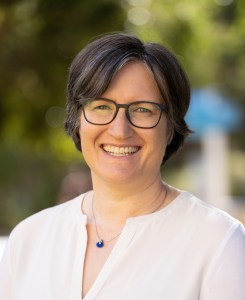
Professor Verena Thomas
Applying creative visual methodologies in cross-cultural contexts
Video Reflexive Ethnography (VRE) as a research approach has been able to demonstrate clear benefits in understanding the complexities of practice through the application of visual methods. Working in international development and cross-cultural contexts brings up questions beyond the complexity of specific settings and practice to understanding structural power imbalances and inequalities, not only between researchers and research participants, but also with regards to historic and contemporary relations between different groups from diverse backgrounds.
Sharing examples from action research projects in the Pacific region, I discuss how historic experiences, the application of Indigenous Knowledge systems and principles, and cultural symbolism might be considered when applying with visual methodologies. Demonstrating the use of visual tools across a range of topics in health communication, gender equality and education projects, I outline key components relevant to the politics of representation, different forms of expression, and developing communicative competence across a range of groups and organisations. Seeking to broaden the conversation about the use of VRE, I further contextualise these experiences within a discussion of the role of researchers and academic institutions in knowledge co-creation and opportunities for generating non-traditional research outputs for wider audiences and impact.
Bio: Verena Thomas is Professor in Communication and Associate Dean Research at Edith Cowan University. Verena’s work focuses on creative research approaches and communication for social change in cross-cultural contexts. She has led numerous award-winning research and production projects with donors, government and NGO partners in the areas of health communication, gender equality and education. With extensive experience in research and media capacity building in the Pacific region, Verena facilitates participatory research processes in collaboration with community groups and works with institutions and organisations that want to strategically integrate creative approaches into social change programs. Her publication record involves a wide range of collaborations including filmic and visual outputs co-created with community groups.
 videoreflexiveethnography.com