Video-Reflexive project in Biocontainment on ABC News!

An incredible project led by Associate Professor Mary Wyer, using video-reflexive methods and simulation in the New South Wales Biocontainment Centre was recently featured on ABC News in Australia.

A/Prof Wyer says: “It’s pretty special to see this ABC News story feature a research project that began as an idea I had a few years ago. It took time, planning, and a lot of collaboration to bring it to life, and I feel incredibly lucky to work with such a brilliant team!”

What a conference!

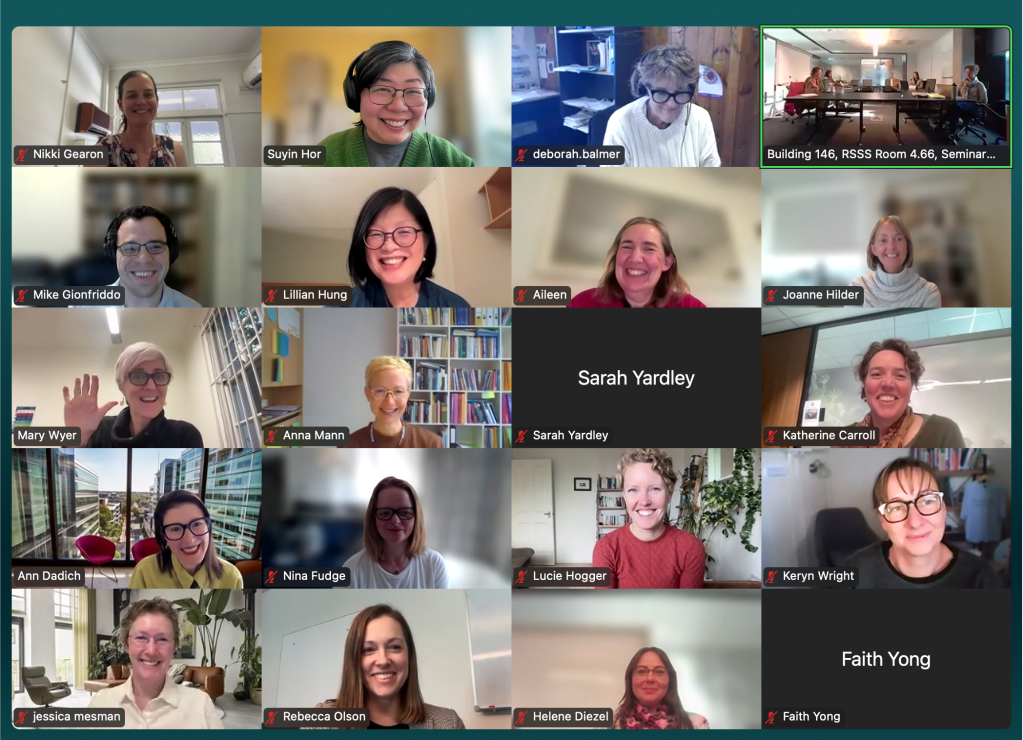
The inaugural conference of the International Association of Video Reflexive Ethnographers has now come to a close. It was a joyous celebration and showcase of the incredible work that VRE researchers are doing all around the world.

Huge congratulations and gratitude to all presenters, who joined us over so many time zones, often at inhospitable hours of the day and night. We will be posting recaps of the conference over the next few days, and we have no doubt the reflexive conversations will continue.

VREIA in Berlin!


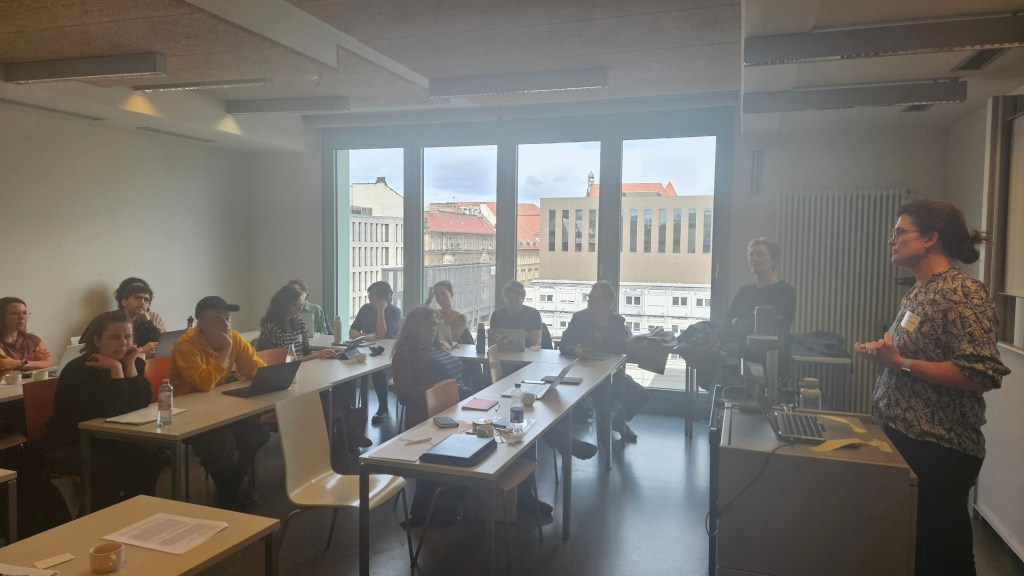
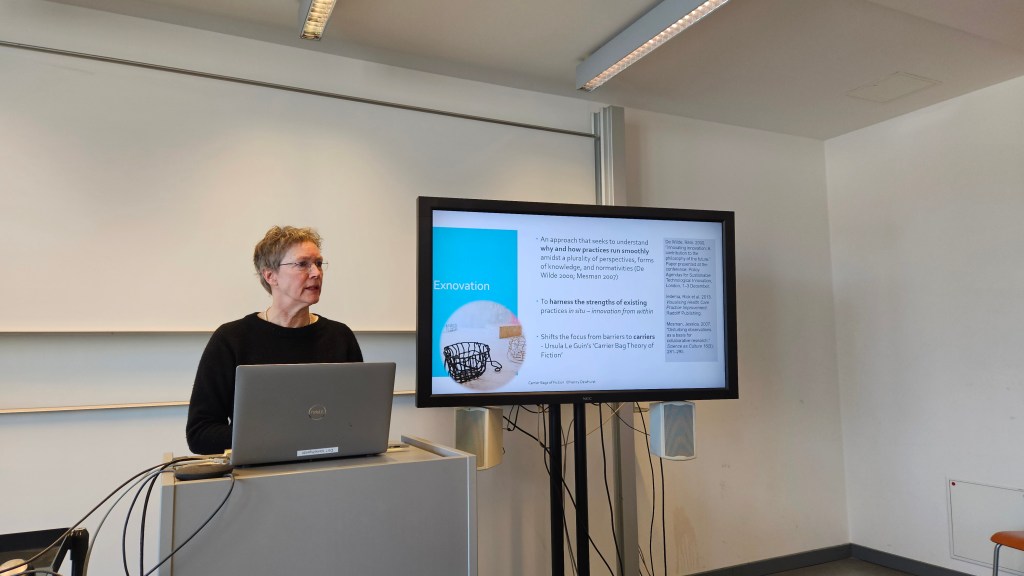
VREIA members recently came together in a wonderful full-day panel on exnovation, chaired by Karina Maldonado-Mariscal (TU Dortmund University) and Prof Jessica Mesman (Maastricht University) at the 2025 STS-HUB conference in Humbolt University.

The panel brought together researchers across two ‘faces’ of exnovation: a deliberate termination of structures, technologies, products, and practices (Heyen, 2017) and approaching forgotten competencies as valuable resources for improvement (Mesman 2008).

Thank you to Karina Maldonado-Mariscal for the panel photos!

2025 Conference Call for Abstracts

The organising committee warmly invites you to join us at the inaugural conference of the International Association of Video Reflexive Ethnographers. The online conference will bring together scholars from across the globe, to discuss video reflexive ethnography.

The program will include keynote presentations from Professor Rick Iedema,  Independent Scholar,  and Professor Verena Thomas  from Edith Cowan University, along with opportunities for conference delegates to present their research and discuss relevant topics of interest. 

The 2025 Video Reflexive Ethnography conference offers VRE practitioners the opportunity to reflect on more than a decade of ground-breaking research, during which the methodology has driven insights and impacts in health and other disciplines. In particular, video-reflexivity has enabled researchers to embrace, account for, and gain traction with complexity in practice, across multiple settings. 

Video-reflexive ethnography is a methodology that bridges academic and professional practice. While seeking to explore VRE’s past, present and future, we are also seeking to examine further opportunities for VRE in engagement with other methods, disciplines and approaches. 

Submissions may seek to address: 

  • The conceptual and ethical underpinnings of VRE in practice
  • Case studies of VRE engagement and impact
  • Reflexivity among practitioners and researchers in practice.  
  • VRE in relation to other visual methods and participatory methodologies 
  • Teaching and translating VRE in academic and non-academic settings 
  • Evolving technologies and VRE
  • VRE in engagement with public health, safety and quality, implementation science, co-design, policy development, evaluation, innovation, etc. 

Together, we will explore and discuss the innovative field of video reflexive ethnography, fostering rich dialogues and collaborations. We look forward to your participation in what promises to be a groundbreaking and inspiring conference. 

Conference Format: The conference will be online, across a number of sessions that will accommodate different time zones across the Southern and Northern hemispheres. 

Key dates:

  • Abstract submissions due: 28 February 2025
  • Abstract acceptance notification: 7 March 2025
  • Draft program released: 31 March 2025
  • Conference: 10-12 June 2025

Submission Types:

  • Short presentation (15 minutes)
  • Proposals for other sessions types are welcome, keeping in mind the online format.

Click HERE to submit an abstract or propose a session.

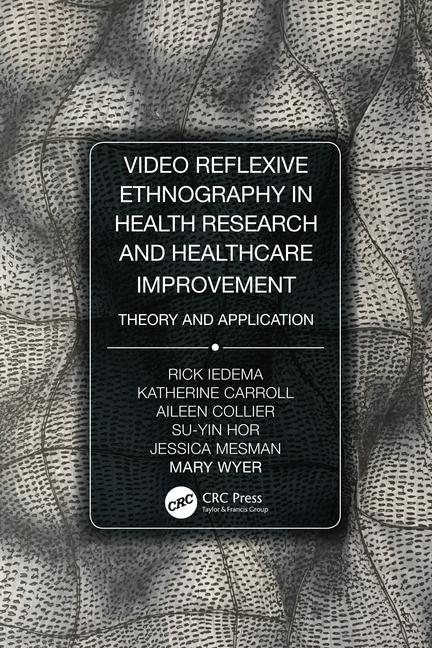
New VRE book out now: Video-Reflexive Ethnography in Health Research and Healthcare Improvement: Theory and Application

2019 book

This innovative, practical guide introduces researchers to the use of the video-reflexive ethnography in health and health services research. This methodology has enjoyed increasing popularity among researchers internationally and has been inspired by developments across a range of disciplines: ethnography, visual and applied anthropology, medical sociology, health services research, medical and nursing education, adult education, community development, and qualitative research ethics.

Cover image: © Arran Iedema-Lowe. The hand-drawn image depicts the façade of Guy’s Hospital, London. The organic shape of this façade distinguishes it from more traditional hospital designs. It embodies, in visual form, the message that healthcare is no longer linear and regimented but flexible and responsive to different people’s needs and expectations.

TABLE OF CONTENTS

List of figures
List of tables
Authors

0. Introduction
1. The theoretical background of video-reflexive ethnography
2. Preparing for fieldwork and collaborative data construction
3. Recruiting VRE participants
4. Videoing and analyzing practices
5. Preparing reflexive sessions
6. Conducting reflexive sessions
7. Evaluating VRE achievements
8. Publishing VRE studies
9. Tying the principal strands of the book together

Appendix A: Examples of funded VRE projects
Appendix B: VRE and ethics
Index

Iedema, R., Carroll, K., Collier, A., Hor, S. Y., Mesman, J., & Wyer, M. (2019). Video-Reflexive Ethnography in Health Research and Healthcare Improvement: Theory and Application. CRC Press.

Mayo Clinic hosts a three day workshop on video-reflexive ethnography

On  June 28-30, 2018 the Mayo Clinic Robert D. and Patricia E. Kern Center for the Science of Health Care Delivery hosted a 3 day workshop – An Introduction to Video-Reflexive Ethnography (VRE) in Health Care.

The workshop was led by Dr Katherine Carroll  who liaised with several VREIA members to achieve the workshop objectives, which included:

• Describing the theoretical, philosophical and methodological underpinnings of
video-reflexive ethnography.

• Specifying the three phases involved in video-reflexive ethnography.

• Discussing the ethical dimensions and implications of using video in real life situations and organisational sites.

• Demonstrating practical experience using video-reflexive ethnography, including filming and reflexive feedback.

• Explaining the rationale for video-reflexive ethnography to professionals, and managers as well as grant funders.

VREGraphic_header

http://mayo.conferenceataclick.com/mayo-vre_2017/home_Live1.htm


Westmead Association Hospital Week Research Symposium

The Westmead Association Hospital Week Research Symposium is an annual event that features presentations from local researchers. It is an opportunity to showcase research and develop collaborations on the Westmead Campus. In particular it is an opportunity to showcase research to the general hospital campus community, including the patients and families that use the Westmead Campus services.

Research posters from across the Precinct were displayed throughout the Westmead Hospital from Wednesday 29th – 31st August. Several VREIA members showcased their VRE research at this event.

Su-yin HorMary Wyer & Lyn Gilbert – along with two of the participants – Zhao, Ya (Cynthia) & Parmar, Rajesh, submitted a poster for their research study:
Clinician-led improvement using video-reflexive methods: A workshop trial and evaluation
This project provided a 1.5-day VRE workshop for nurses in Westmead hospital, to support them in designing, implementing and evaluating their own projects, to address issues in their own units. Support also included in-person advice during participants’ projects, and the loan of equipment. Several participants have completed their projects.
Through semi-structured interviews and a focus group with participants, we identified the factors that make it difficult for clinicians to undertake these projects, as well as the factors that enable them to do so. Our findings have immediate implications for developing future workshops and support for clinicians in undertaking projects using VRM. However, they also help us understand the challenges and opportunities involved when we ask healthcare professionals to undertake continuous learning and practice improvement, in order to provide safe care in increasingly complex circumstances.


Mary Wyer, Suyin Hor, Lyn Gilbert, Ruth Barratt, Tegan Dawson, Elizabeth Hobby, Kathy Dempsey, Patricia Ferguson, Mitchell Brown, Rosemary Sadsad & Nat Godbold submitted a poster for their research study:
Talking with patients: Improving clinician-patient communication around healthcare-associated infections using video-reflexive methods
This study is an ongoing researcher-led collaboration between Westmead Hospital Renal Unit staff, patients and families, infection prevention and control (IPC) practitioners, laboratory staff and infectious disease physicians. It aims to improve clinician-patient communication around the screening and identification of multi-drug resistant organisms (MROs), with a broader aim of reducing HAIs by increasing patient involvement in IPC.
Video recordings were made of the patient screening process on the renal unit, in the laboratory, and in the IPC offices. Clinician-patient communication was also recorded, and this was shown to patients, with their comments then added to the pool of video clips about the screening process. These clips were then shown to nurses, IPC practitioners and laboratory staff to generate discussion and strategies for improving current communication practices.
Patients, nurses and IPC practitioners were able to identify communication gaps, opportunities and strategies when viewing the clips of the MRO screening process. In particular, nurses were able to better appreciate the informational needs of their patients, and to design resources to support their communication with patients during this process.